
There’s a wide array of loan options available to consumers, each with its own set of features, benefits, and risks. Understanding the various types of loans can empower individuals to make informed financial decisions that align with their goals and circumstances. Whether you are considering a mortgage, personal loan, auto loan, or student loan, it’s crucial to be aware of the interest rates, repayment terms, and potential fees associated with each type of loan.
By grasping the key differences between fixed-rate and variable-rate loans, secured and unsecured loans, and short-term and long-term loans, you can navigate the borrowing process with confidence. This guide aims to demystify the complexities of borrowing money and provide you with the knowledge needed to choose the best loan option for your specific needs.
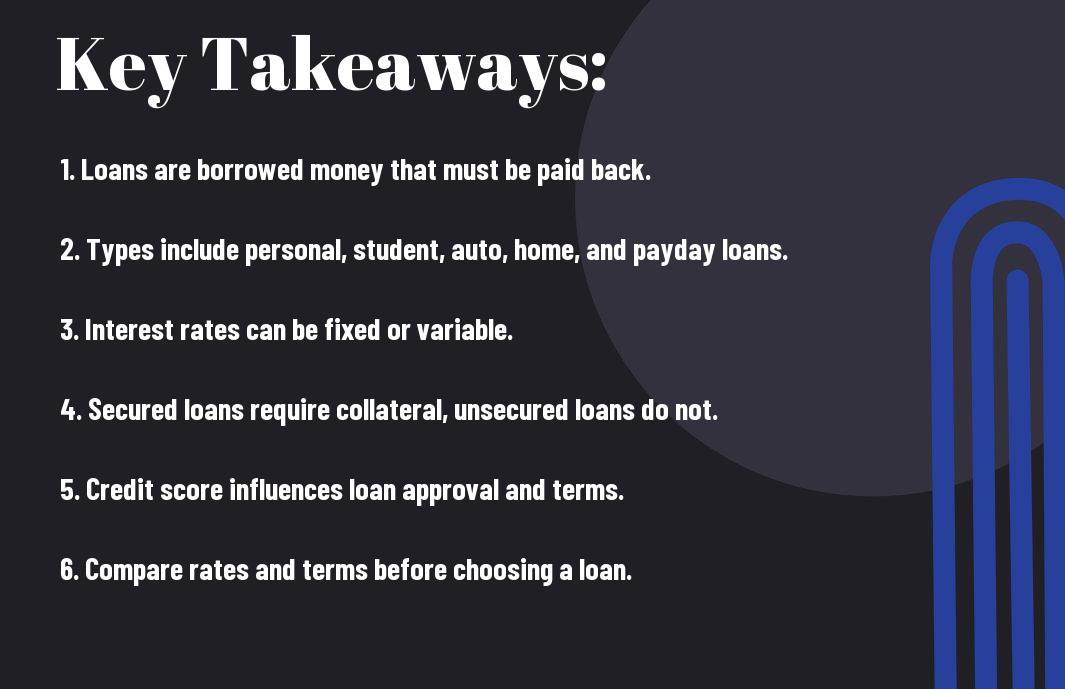
Key Takeaways:
- Loans are not one-size-fits-all: There are various types of loans available in the market to suit different financial needs and situations.
- Understanding the purpose of the loan is crucial: Different types of loans serve different purposes, such as buying a home, funding education, or starting a business.
- Interest rates vary based on the type of loan: Interest rates can be fixed or variable, and they can significantly affect the overall cost of borrowing.
- Secured vs. Unsecured loans: Secured loans are backed by collateral, while unsecured loans are not and typically have higher interest rates.
- Personal loans for various needs: Personal loans can be used for various purposes, such as debt consolidation, home improvements, or unexpected expenses.
- Student loans for education: Student loans are designed to help students cover the cost of education and typically come with lower interest rates and flexible repayment options.
- Mortgages for homebuyers: Mortgages are long-term loans used to finance the purchase of a home, and they can have fixed or adjustable interest rates.
The Basics of Borrowing
There’s one universal truth when it comes to managing your finances – borrowing money is often a necessity. Understanding the basics of borrowing is crucial for making informed financial decisions. Whether you’re looking to buy a home, start a business, or cover unexpected expenses, loans can provide the necessary funds to achieve your goals.
What is a Loan?
With a loan, a lender provides you with a sum of money that you agree to repay within a set period, typically with added interest. Loans can be obtained from various sources, including banks, credit unions, online lenders, and peer-to-peer platforms. Each type of loan comes with its terms and conditions, interest rates, and repayment schedules.
Understanding Interest Rates
For borrowers, interest rates play a crucial role in determining the total cost of the loan. The interest rate is crucially the cost of borrowing money and is expressed as a percentage of the loan amount. It’s important to understand the difference between fixed and variable interest rates. Fixed rates remain the same throughout the loan term, providing predictability in monthly payments. On the other hand, variable rates can fluctuate based on market conditions, potentially impacting your repayment amount.
To make the most of your borrowing, it’s crucial to compare interest rates from different lenders and assess the overall cost of the loan. Factors that influence interest rates include your credit score, loan amount, repayment term, and the type of loan. By understanding how interest rates work, you can make informed decisions and choose the loan that best fits your financial needs.
Secured vs. Unsecured Loans
Definition and Differences
Differences: Secured loans are backed by collateral, which is an asset that the borrower owns, such as a house or a car. If the borrower defaults on the loan, the lender can seize the collateral to recover their losses. On the other hand, unsecured loans do not require any collateral and are based solely on the borrower’s creditworthiness. This makes unsecured loans riskier for lenders, so they typically come with higher interest rates.
When to Choose Secured or Unsecured Loans
Definition: When deciding between a secured or unsecured loan, it’s important to consider your financial situation and the purpose of the loan. Secured loans are ideal for borrowers who have valuable assets to use as collateral and need to borrow a large amount of money at a lower interest rate. On the other hand, unsecured loans are suitable for borrowers who do not have assets to pledge as collateral but have a good credit score and a stable income to qualify for the loan.
Plus, securing a loan with collateral can help borrowers qualify for larger loan amounts and lower interest rates. However, it also puts the borrower at risk of losing their assets if they fail to repay the loan. Unsecured loans, while not requiring collateral, come with higher interest rates and stricter eligibility criteria. By understanding the differences between secured and unsecured loans, borrowers can make informed decisions based on their financial needs and circumstances.
Personal Loans
Characteristics of Personal Loans
All personal loans have certain characteristics that distinguish them from other types of loans. One of the key characteristics of personal loans is that they are unsecured, meaning they are not backed by any collateral. This makes personal loans accessible to a wide range of borrowers, but it also typically results in higher interest rates compared to secured loans. Another important characteristic of personal loans is that they usually have fixed interest rates and monthly payments, making it easier for borrowers to budget and plan for repayment.
Scenarios for Using Personal Loans
Any individual may consider using a personal loan for a variety of reasons. One common scenario is using a personal loan to consolidate higher-interest debt, such as credit card debt, into one lower-interest monthly payment. Another scenario where a personal loan may be useful is for unexpected expenses, such as medical bills or car repairs, that cannot be covered by savings or other means.
On the other hand, it’s important to note that personal loans should not be used for frivolous expenses or luxuries, as this can lead to a cycle of debt that is difficult to break free from. Before taking out a personal loan, carefully consider your financial situation and whether you have the means to repay the loan responsibly.
Home Loans (Mortgages)
Now, let’s explore into the world of home loans, often referred to as mortgages. Home loans are a type of loan specifically designed to help individuals purchase a house or property. This type of loan typically involves a large amount of money borrowed over a long period, usually ranging from 15 to 30 years. There are various options available to cater to different financial situations and preferences.
Types of Home Loans
Loans for buying a home come in different forms, each with its unique features and benefits. It’s important to understand the options available to choose the one that best fits your needs. Some common types of home loans include
- Fixed-rate mortgages
- Adjustable-rate mortgages
- Government-insured loans (such as FHA, VA, and USDA loans)
- Jumbo loans
- Interest-only loans
Assume that each type of loan has its pros and cons, so it’s crucial to weigh them carefully before making a decision.
| Loan Type | Description |
| Fixed-rate mortgages | Interest rate remains the same throughout the loan term |
| Adjustable-rate mortgages | Interest rate can fluctuate based on market conditions |
| Government-insured loans | Backed by the government, offering favorable terms for eligible borrowers |
| Jumbo loans | For financing high-value properties that exceed conforming loan limits |
| Interest-only loans | Borrowers only pay interest for a certain period before principal payments kick in |
Navigating the Home Buying Process
Any individual looking to purchase a home will need to navigate the complex process of securing a home loan. This process involves various steps such as
choosing a suitable loan type, gathering necessary documents, applying for pre-approval, finding a real estate agent, searching for properties, making an offer, undergoing a home inspection, and finally closing the deal.
With interest rates playing a significant role in the affordability of a home loan, it’s crucial to shop around and compare offers from different lenders. Understanding the terms and conditions of the loan is important to avoid any surprises down the road. Working with a knowledgeable loan officer can make the process smoother and ensure that you make well-informed decisions.
Auto Loans
Your journey to owning your dream car begins with understanding auto loans.
Understanding Auto Loan Terms
Auto loans are a type of installment loan specifically designed to help you finance a vehicle purchase. When you take out an auto loan, you are borrowing a specific amount of money from a lender to buy a car. This amount is then paid back over a predetermined period, usually in monthly installments.
Tips for Financing Your Vehicle
Regarding financing your vehicle, there are several key tips to keep in mind. Before submerging into a loan agreement, be sure to research different lenders to find the best interest rates and loan terms. Additionally, consider making a larger down payment to reduce the amount you need to borrow and potentially lower your monthly payments. Lastly, always read the loan agreement carefully and understand all the terms and conditions before signing on the dotted line.
- Interest rates can vary between lenders, so be sure to shop around for the best rate.
- Consider making a larger down payment to reduce the amount you need to finance.
- Read the loan agreement carefully and ask questions if you don’t understand any terms or fees.
Auto financing can be a great way to make owning your dream car a reality, but it’s important to approach it with caution.
More Info about Tips for Financing Your Vehicle
When financing your vehicle, it’s crucial to shop around for the best interest rates to save money in the long run. Additionally, making a larger down payment can help you reduce the total amount you need to borrow and lower your monthly payments. Before signing any loan agreement, make sure you understand all the terms and conditions, including any fees or penalties for early repayment. After doing your research and considering these tips, you can confidently finance your next car purchase.
- Compare interest rates from different lenders to find the best deal.
- Consider making a larger down payment to reduce your monthly payments.
- Understand all the terms and conditions of the loan agreement before signing.
Understanding
Auto loans can be a useful tool for purchasing a vehicle, but they also come with risks. It’s important to carefully review the terms of the loan, especially interest rates and repayment schedule. Missing payments can result in penalties and even repossession of your car. On the positive side, auto loans can help you afford a car that may otherwise be out of reach. Be sure to weigh the pros and cons before committing to a loan to finance your next vehicle.
Student Loans
Keep in mind that student loans are a type of financial aid designed to help students pay for higher education expenses, such as tuition, books, and living expenses. They can be a valuable resource for those pursuing a college degree but can also lead to significant debt if not managed carefully.
Federal vs. Private Student Loans
Student loans can be divided into two main categories: federal and private. Federal student loans are backed by the government and typically offer lower interest rates and more flexible repayment options. They do not require a credit check or a cosigner, making them more accessible to a wider range of students. Private student loans, on the other hand, are offered by banks, credit unions, and other financial institutions. They may have higher interest rates and fewer borrower protections than federal loans, but can be a good option for students who have exhausted their federal loan options.
How to Manage Student Loan Debt
To effectively manage student loan debt, it is crucial to stay organized and informed about your loans. Create a budget that includes your monthly loan payments and prioritize making timely payments to avoid default. Consider enrolling in an income-driven repayment plan if you are struggling to make payments, as these plans adjust your monthly payment amount based on your income and family size. Additionally, explore opportunities for loan forgiveness or discharge programs, such as Public Service Loan Forgiveness, if you work in a qualifying profession.
It is important to communicate with your loan servicer if you encounter any difficulties in repaying your student loans. They can provide guidance on available repayment options and help you avoid default. Ignoring your student loan debt can have serious consequences, including damage to your credit score and wage garnishment. Stay proactive and seek assistance if needed to effectively manage and ultimately pay off your student loans.
Business Loans
Options for Financing a Business
To successfully start or grow a business, entrepreneurs often need financial support in the form of business loans. There are various options available for financing a business, including traditional bank loans, Small Business Administration (SBA) loans, alternative lenders, and even peer-to-peer lending platforms. Each option comes with its own set of terms, interest rates, and repayment schedules, so it’s necessary to explore and compare all options before making a decision.
Preparing to Apply for a Business Loan
Before applying for a business loan, it’s crucial to prepare all necessary documentation and have a clear understanding of your financial needs. Lenders will typically require documents such as business plans, financial statements, tax returns, and personal information about the business owner. Additionally, having a solid credit score and a well-thought-out plan for how the loan will be used can increase the chances of approval.
Remember to thoroughly research the different loan options available and choose the one that best suits your business needs. Be prepared to demonstrate your ability to repay the loan and how it will benefit your business in the long run. Ensure all necessary documentation is organized and readily available to expedite the loan application process.
Credit Lines and Credit Cards
Many individuals rely on credit lines and credit cards to manage their financial needs effectively. Understanding how credit lines work and using credit cards wisely can help individuals maintain a healthy financial profile and avoid falling into debt traps.
Understanding Credit Lines
For beginners, credit lines are revolving credit accounts that allow borrowers to access funds up to a certain limit. Unlike traditional loans with fixed terms, credit lines give borrowers the flexibility to borrow, repay, and borrow again up to their credit limit. Interest is only charged on the amount borrowed, making it a convenient option for managing fluctuating expenses.
Credit Cards: Using Them Wisely
Using credit cards wisely involves making timely payments, keeping balances low, and avoiding unnecessary spending. Maxing out credit cards, making only minimum payments, and missing due dates can negatively impact credit scores. However, when used responsibly, credit cards can offer benefits such as cashback rewards, travel perks, and fraud protection.
Another important aspect of using credit cards wisely is understanding your card’s terms and conditions, such as interest rates, fees, and rewards programs. By staying informed and disciplined in your spending habits, you can harness the benefits of credit cards without falling into debt traps.
Debt Consolidation Loans
When to Consider a Debt Consolidation Loan
Keep in mind that debt consolidation loans can be a helpful tool for individuals who are juggling multiple high-interest debts, such as credit card balances or personal loans. By combining these debts into one single loan with a lower interest rate, borrowers can simplify their repayments and potentially save money on interest over time. This type of loan can provide some relief by streamlining payments into one manageable monthly installment.
Potential Pitfalls and Things to Look Out For
Any individual considering a debt consolidation loan should carefully assess their financial situation before diving in. One common pitfall to watch out for is taking out a consolidation loan without addressing the root cause of the debt. If spending habits are not adjusted, there is a risk of falling back into the same cycle of accruing debt. Additionally, some debt consolidation loans come with fees or higher interest rates, so it’s crucial to read the fine print and compare loan terms before committing.
It is crucial to remember that debt consolidation is not a magic solution and may not be the right choice for everyone. One must weigh the pros and cons carefully before moving forward. Not addressing the underlying issues that led to the debt in the first place can result in even more financial trouble down the line. Seeking advice from a financial advisor or credit counselor can provide valuable insights and help determine if a debt consolidation loan is the best course of action.
Payday and Short-Term Loans
What Are Payday and Short-Term Loans?
Loans like payday and short-term loans are designed to provide individuals with quick access to funds. Typically, these loans are for small amounts and are meant to be repaid within a short period, often by the borrower’s next payday. They are easy to qualify for and require minimal paperwork, making them a tempting option for those in need of immediate cash.
The Controversy Surrounding These Loans
Payday and short-term loans have stirred up controversy due to their high interest rates and fees. Critics argue that these loans often trap borrowers in a cycle of debt, as the short repayment period and high costs can make it difficult for individuals to fully repay the loan on time. This can lead to borrowers taking out additional loans to cover the original amount, creating a cycle of debt that is hard to break free from.
Short-term loans can be a quick solution in times of financial emergencies, but they come with substantial risks. The high-interest rates and fees associated with these loans can lead borrowers into a debt trap if not managed carefully. It’s imperative for individuals to fully understand the terms and conditions of payday and short-term loans before considering taking one out.

Loan Alternatives and Supplements
Despite the traditional options available, there are alternative lending methods that may suit different financial needs. Two popular options include Peer-to-Peer Lending and Other Non-traditional Lending Options.
Peer-to-Peer Lending
Peer-to-Peer lending involves individuals borrowing money directly from other individuals or investors through online platforms. This method bypasses traditional financial institutions, offering potentially lower interest rates to borrowers and higher returns to investors. Borrowers create listings with the amount needed and the purpose of the loan, while investors choose which loans to fund based on risk assessment and interest rates.
Other Non-traditional Lending Options
Other non-traditional lending options can include crowdfunding platforms, community development financial institutions, and online lenders. These avenues provide alternatives to traditional bank loans with different approval processes and terms. It is imperative to research and compare different options to find the best fit for your financial situation.
This diversification in the lending landscape offers borrowers a multitude of options tailored to their specific needs. Whether looking for lower interest rates, faster approval, or flexibility in loan terms, exploring non-traditional lending options can open up new possibilities for financing.
Navigating Loan Agreements
Not all loans are created equal, and understanding the terms of your loan agreement is crucial to being a responsible borrower. Loan agreements outline the terms and conditions of the loan, including the amount borrowed, the interest rate, the repayment schedule, and any penalties for late payments or defaults. Navigating these agreements can be overwhelming for beginners, but with a little know-how, you can make informed decisions about your borrowing.
Key Terms and Clauses to Understand
Understand the key terms and clauses in your loan agreement to avoid any surprises down the line. Some important terms to pay attention to include the Annual Percentage Rate (APR), which represents the cost of borrowing over a year, and the loan term, which is the amount of time you have to repay the loan. Clauses such as prepayment penalties, late fees, and arbitration clauses can significantly impact the overall cost of the loan and your rights as a borrower.
The Importance of Reading the Fine Print
Understand that reading the fine print of your loan agreement is crucial before signing on the dotted line. While it may be tempting to gloss over the details, missing important clauses or terms could lead to financial consequences down the road. Pay close attention to any hidden fees, adjustable interest rates, or unfavorable repayment terms that could put you at risk of defaulting on the loan.
Importance: Taking the time to thoroughly read and understand your loan agreement can save you money and protect you from potential pitfalls in the future. Note, it’s better to ask questions and seek clarification before committing to a loan than to face regrets later on.
Summing up
The world of loans can be overwhelming with the variety of options available, each serving different purposes and with their own set of terms and conditions. Understanding these different types of loans is important for making informed decisions when borrowing money. By familiarizing yourself with the characteristics of personal loans, mortgage loans, auto loans, and student loans, you can choose the right loan that aligns with your financial goals and needs.
The key to successful borrowing lies in knowing the differences between each type of loan, including their interest rates, repayment terms, and potential benefits and drawbacks. This beginner’s guide has aimed to provide a foundational understanding of these loans, empowering you to navigate the loan market with confidence and make the best decisions for your financial future. Recall, always consult with financial advisors or lenders to get personalized advice before committing to any loan agreement.